
On Gathering
Running my first book club and the learned experiences.

“Gatherings crackle and flourish when real thought goes into them, when (often invisible) structure is baked into them, and when a host has the curiosity, willingness, and generosity of spirit to try.” - Priya Parker, The Art of Gathering: How We Meet and Why It Matters
I really love hosting and gathering a group of people. I think promoting a space where individuals can come together and share their ideas and thoughts is one of my favorite ways to practice the art of gathering. Recently, I had came up with the idea of starting a book club within the Chinatown-International District of Seattle. And although it was a pretty nervous experience for me at first, it ended up being a really great event that I was able to get very solid takeaways from for future gatherings.
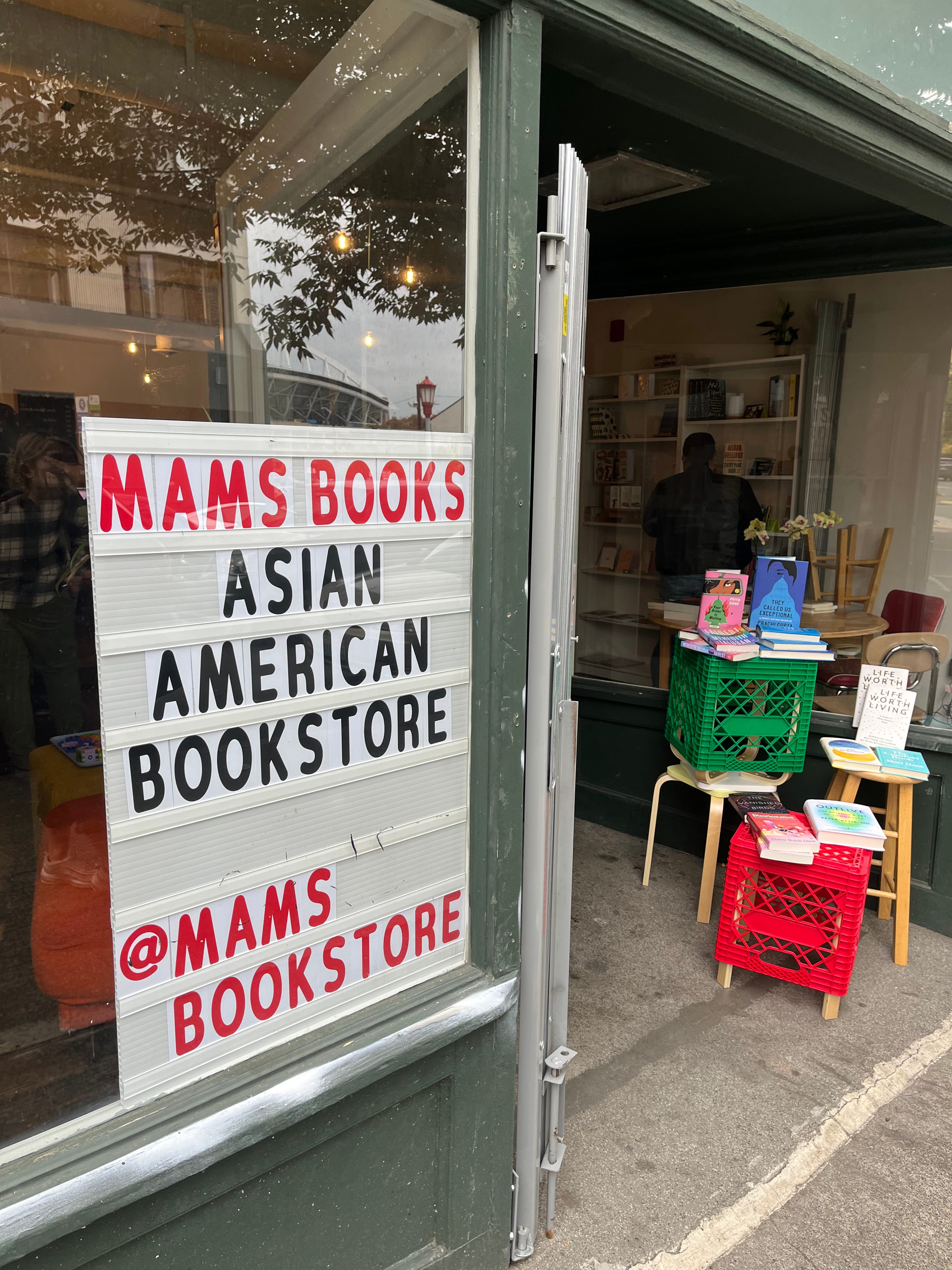
Mams Books - an Asian American Bookstore located in Seattle, WA.
Building the structure for a gathering.
“When we don’t examine the deeper assumptions behind why we gather, we end up skipping too quickly to replicating old, staid formats of gathering.” - Priya Parker
One of the first things I thought about was the structure on how I was going to gather people - both the physical and non physical.
The non physical: How was I going to disseminate information that is both reliable and accessible? Starting off, it was originally a groupchat on Instagram - but this isn’t sustainable. Eventually I had decided on to create an email listing for important information and a Whatsapp groupchat for more casual talk and banter between group members. My reasoning was that generally everyone has an email to receive information and everyone has a phone number in order to participate in a groupchat.
To gain an audience, I had talked to the owner of Mam’s Books to host and spread the word. He posted about the book club on to his Instagram story, and the response was overwhelming! At our first book club meeting, we had approximately 15 people to start.
The physical: How was I going to lay out the book club so everyone could be heard and were able to comfortably voice their thoughts? Initially, I had thought to break it into smaller groups to encourage more intimate discussion. However, we ended up using a larger round table that everyone was able to fit around. This seemed to work really well.
It was a bit difficult to hear people at times, but I think generally the system worked well as people were able to tap into the conversation with ease. I didn’t necessarily love the huge group of people around the round table - as the book club gains traction and grows larger, these logistics will definitely be taken into consideration. But for what it’s worth it worked really well this time!
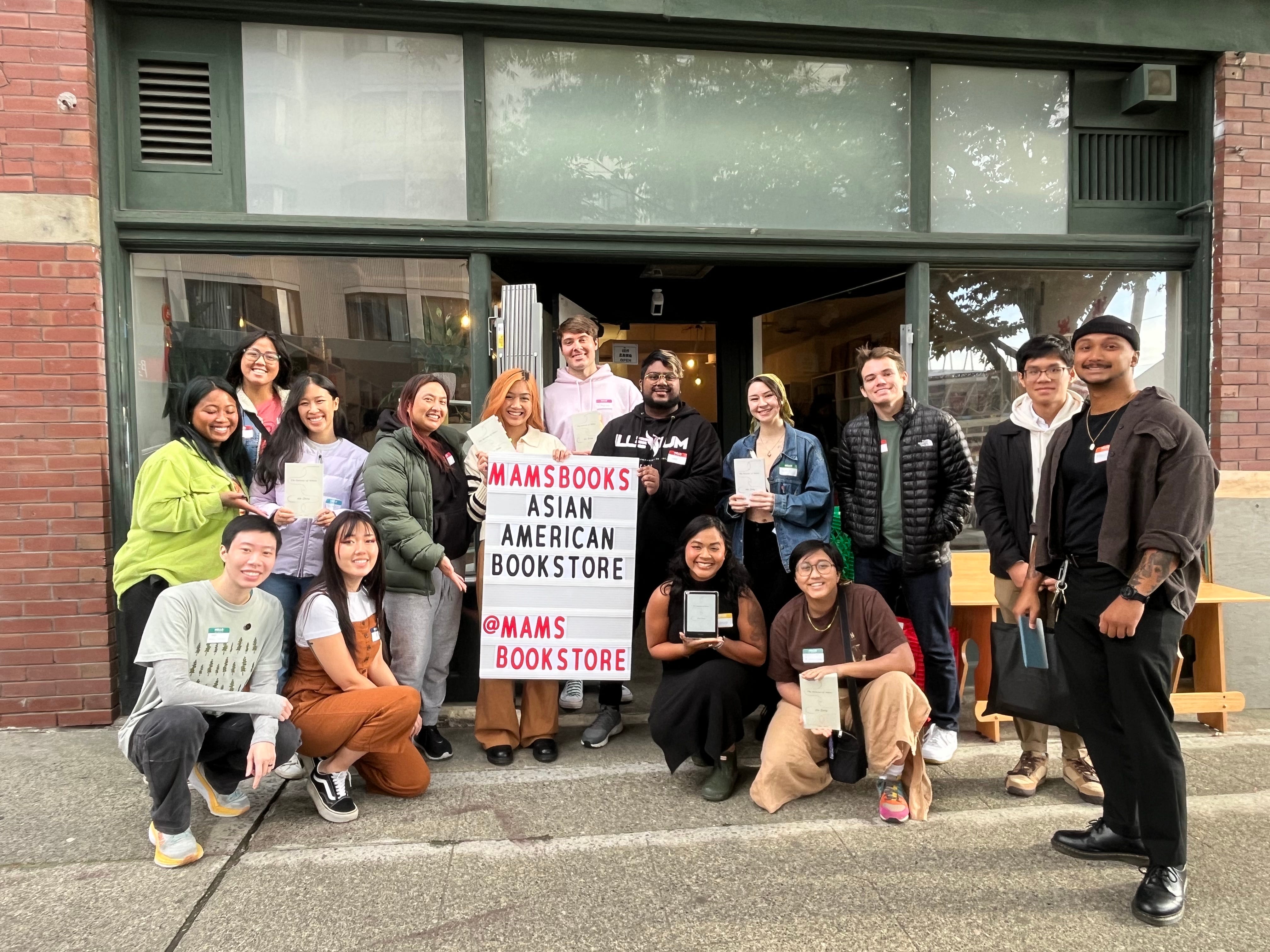
Seattle Chinatown Book Club’s first book club meeting and its members.
Setting the intentionality and guide for the gathering.
“`Why is this night different from all other nights?` Before you gather, ask yourself: Why is this gathering different from all my other gatherings? Why is it different from other people’s gatherings of the same general type? What is this that other gatherings aren’t?” - Priya Parker
I thought about the above quote as I was curating this book club. I had the intention of starting a book club because the book clubs I’ve been to just didn’t feel right. And I think as I fleshed out this club more and more, I realized I really wanted a space where people will leave feeling like they learned something new about the world or that they were able to give input in a space where they felt heard.
I think the beauty of gatherings is that you can do literally whatever you want with them - it really is a social art. For this one in particular, I wanted to develop a space where people were encouraged, yet not pressured. It was important to me to set a guide for people to feel like they were thinking about something bigger within themselves and the outside world.
To do this, I came with preemptive prompts to encourage discussion if it felt like there were pockets of standstill silence. They weren’t anything out of the ordinary. What did you like about this book? What was important to you to take away from the reading? What parts really stood out to you and resonated with you?
With these questions, I put them into the group every now and then to gently encourage discussion. And that’s it. I was really happy with how organically people were sharing their thoughts with the group and it felt like a genuine conversation, not a forced one. Sometimes I even gave my own two cents after asking a question in order to spur some discussion.
While I did encourage organic conversation 80% of the time, I would say 20% of the meeting was coming prepared with a guideline for the group to follow. Again - encouraging, yet not pressuring.
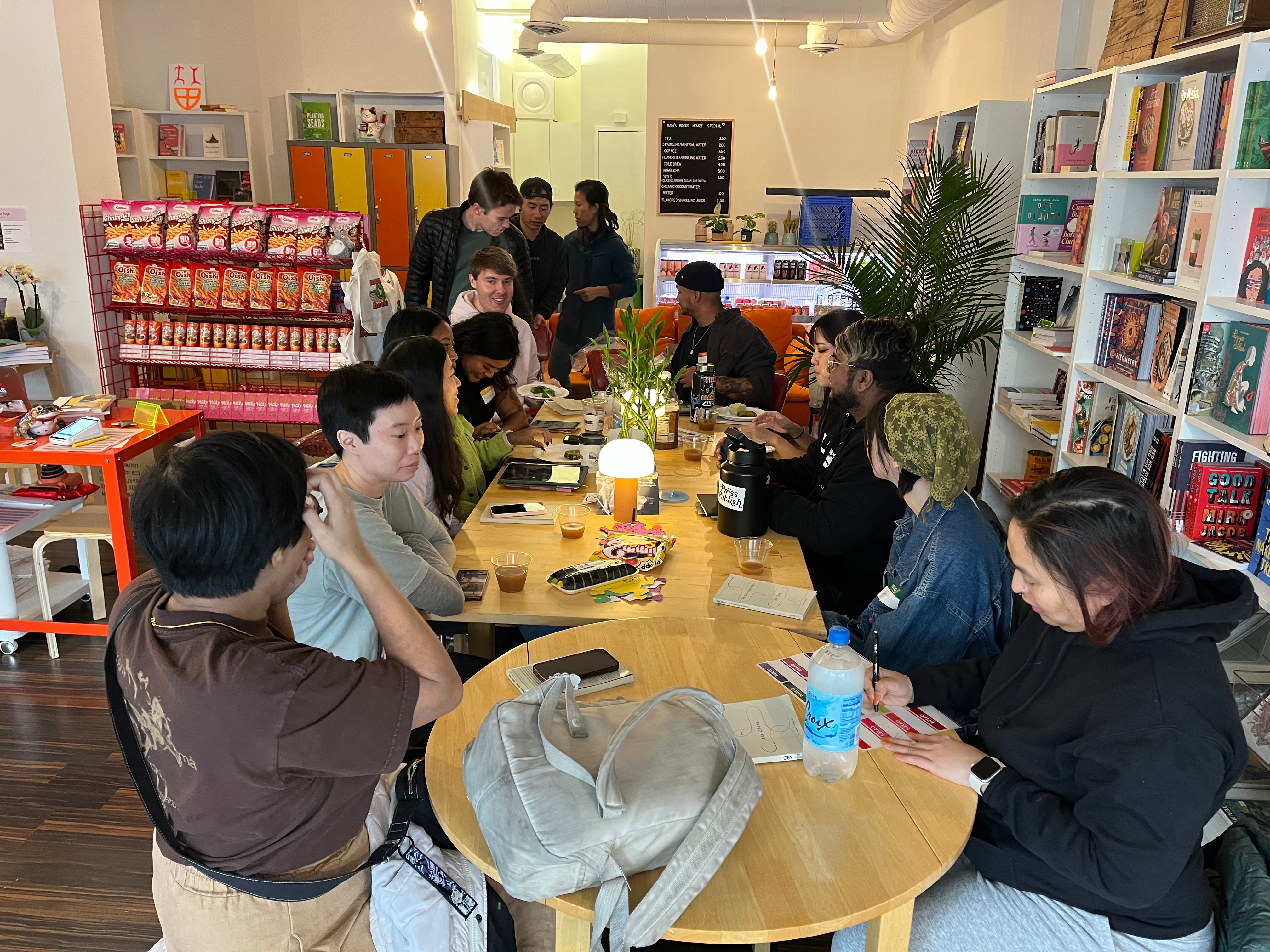
Inclusion is so important to generate ideas.
“None of us shows up as a blank slate to anything.” - Priya Parker
I love this quote a lot because it really puts into perspective that everyone has something to offer. Especially if they willingly came to something that you put together. As a host, it should be a priority that your guests feel like that this is their space as well.
There are ways to build familiarity and comfort that I think work really well.
Name tags. Such an easy thing to forget. Believe it or not, it’s very easy for people to become avoidant of engaging with others because of something as simple as forgetting their name. When you introduce name tags into your gathering, you’re establishing a base level of easy recall for your guests. And that allows for people to feel more comfortable to talk to different individuals, knowing that they don’t have to do the heavy lifting of memory recall.
The ice breaker. A very obvious one. An icebreaker that relates to your gathering can work really well, especially in the context of a book club. Our’s was very simple - Name, pronouns, and favorite book/genre.
Food. Food bonds people, and it’s just another incentive to come to your gathering. Who doesn’t love free food? I think potlucks are a great way for people to showcase their personality and potentially even their culture that they come from.
These are just a few methods but they’re my favorites. Because most importantly, they build familiarity and comfort for the guests in your gathering. And when there is familiarity, there is an exchanging of ideas.
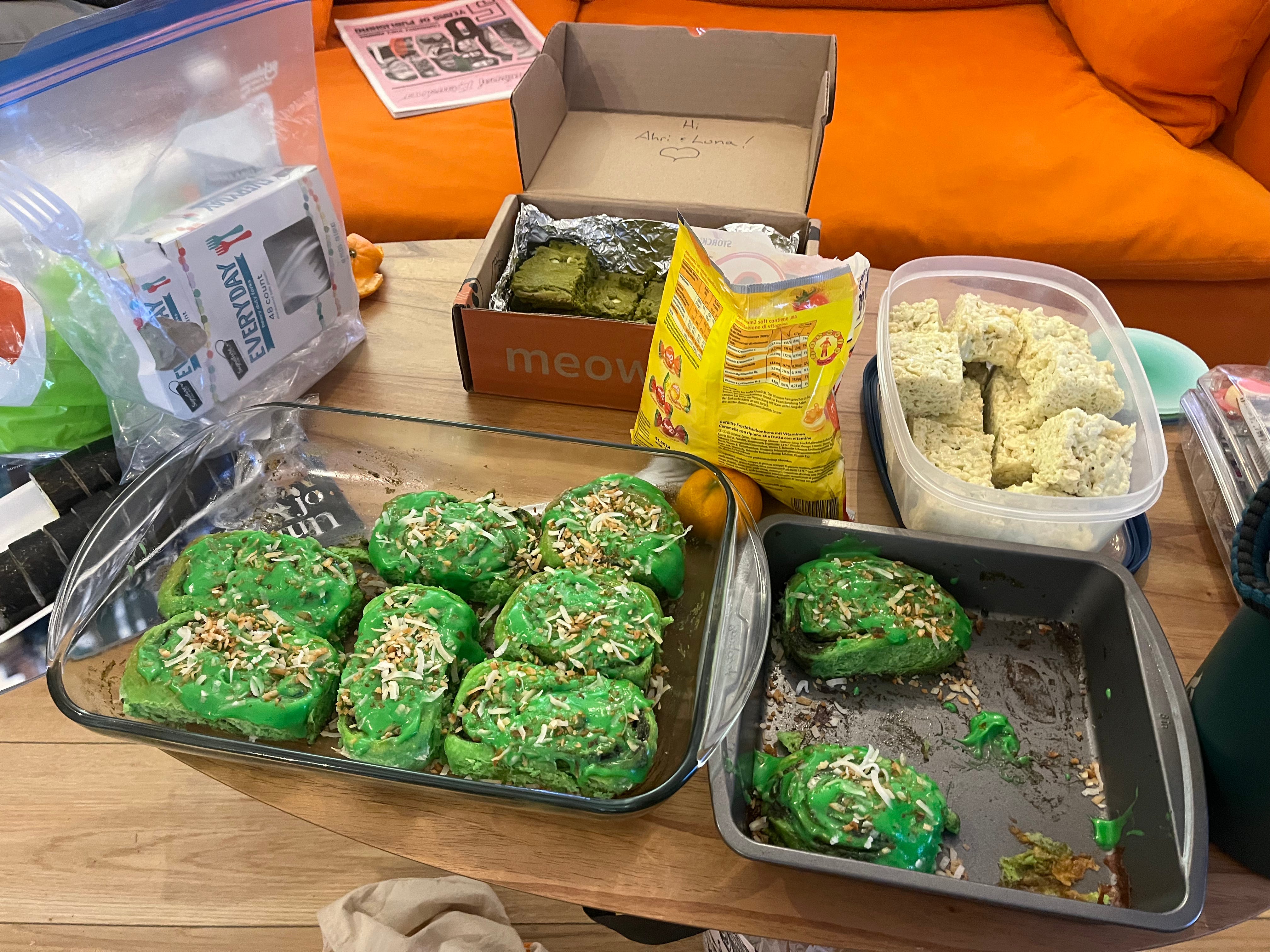
Who doesn’t love free food?
Continuity and legacy.
“Reverse engineer an outcome: Think of what you want to be different because you gathered, and work backward from that outcome.” - Priya Parker
With all the above considered, I now faced the next priority - how do I make it so that this is something people want to come back to and can easily come back to? What are the incentives?
Did I make the structure easy for people? Is the email signup easy to find and accessible? Did the members find the space inclusive and thoughtful? Will the decision system for meetup dates and book selection be intuitive and accessible? Did members find what they want? If not - did they walk away learning about something they didn’t know they wanted?
These are all questions I asked myself in order to build continuity with this book club, because I truly do see it as a long term thing that will go beyond “normal” book club activities. I would love to have potlucks, presentation nights, film meetings, group volunteering for Seattle’s communities, etc.
At its inherent core, it will always be a book club. But I love the idea of the members being able to find camaraderie with each other outside the book club in other avenues of life.
Until then - one meeting at a time. And I hope it lasts a long while.